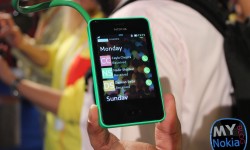
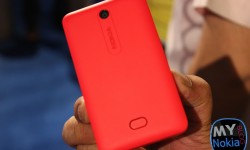
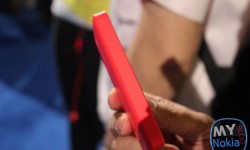
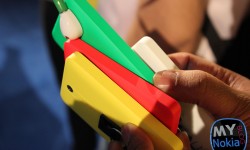
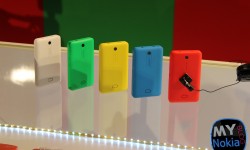
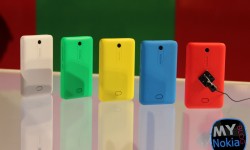
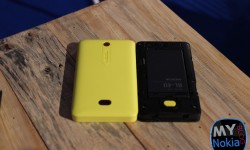
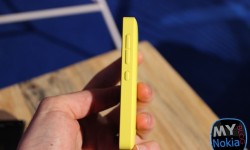
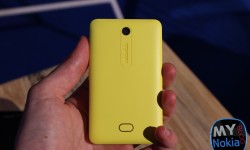
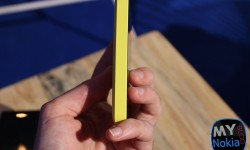
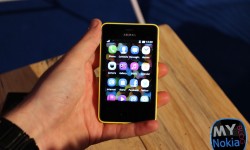
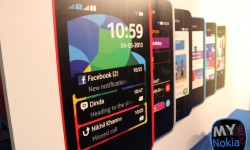
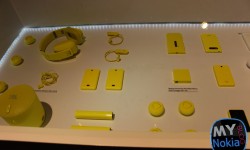
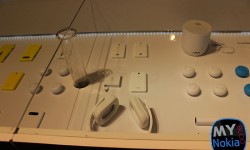
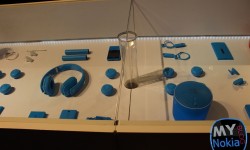
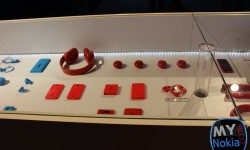
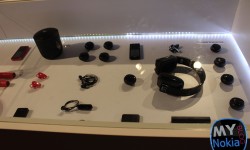
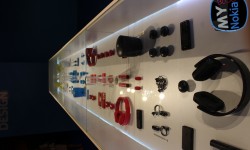
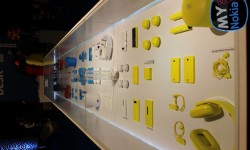
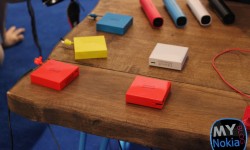
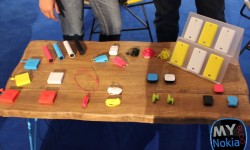
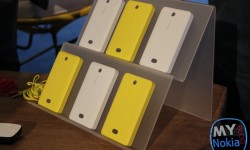
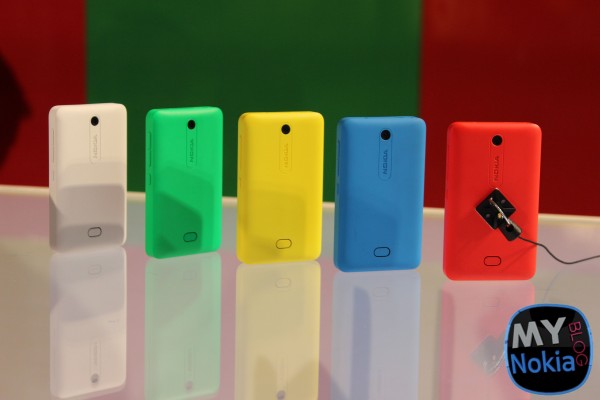
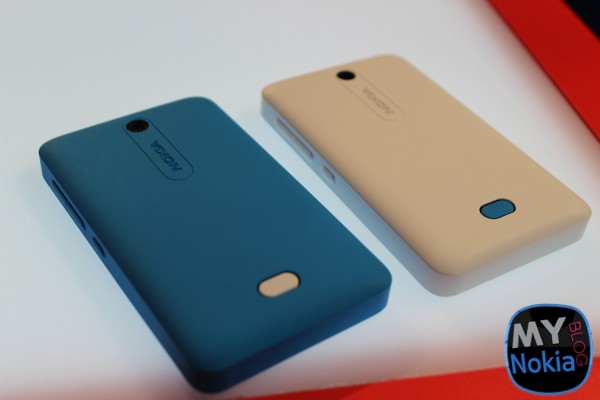
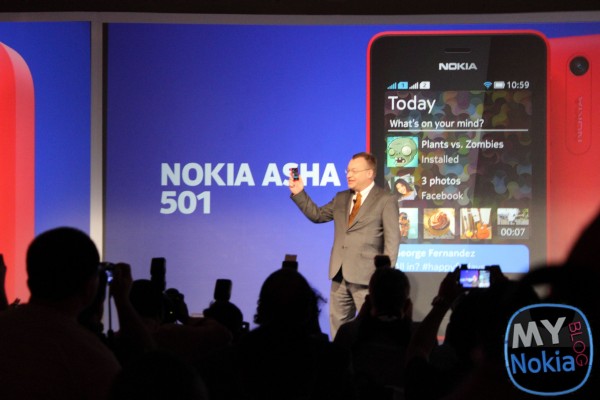
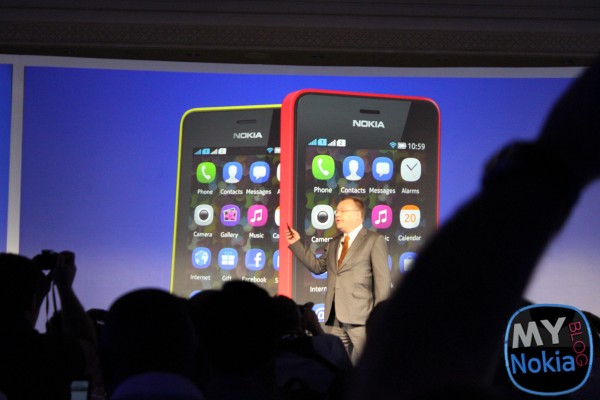
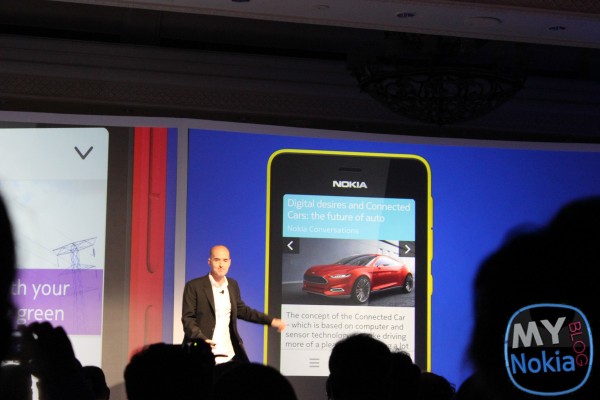
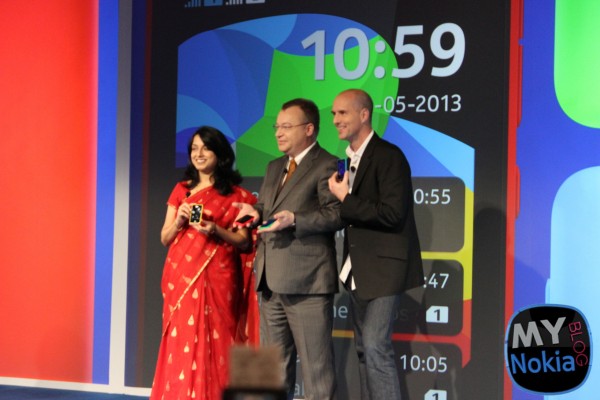
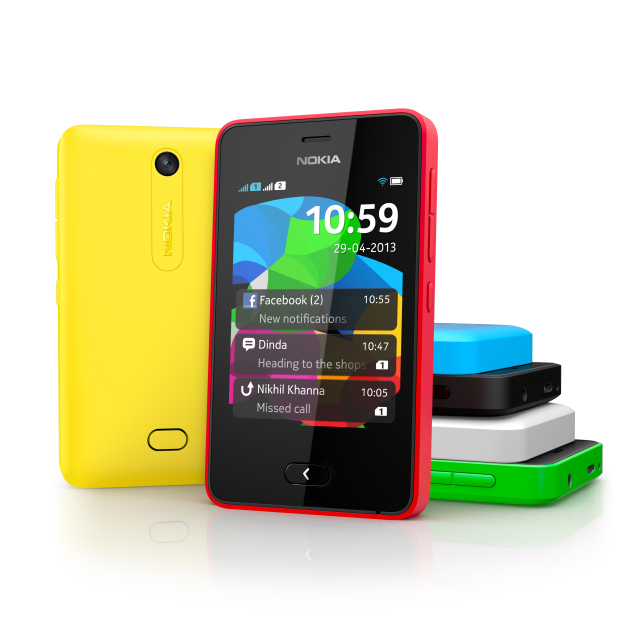
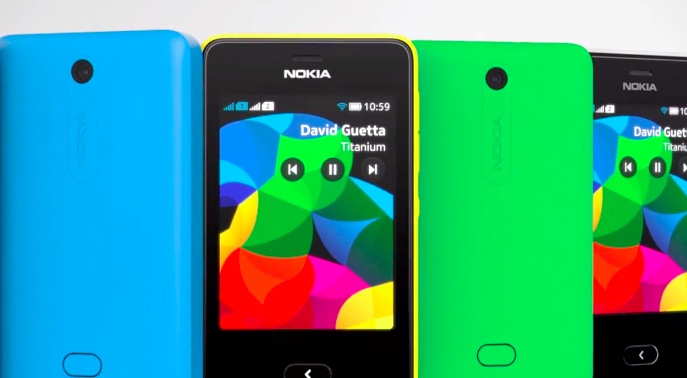
Here’s quick gallery of some images I took of the Nokia Asha 501, as well some of the other awesome stuff they had at the event. My favourite image is the one above and below this. Talking with Jussi Mäkinen, he informed me that the coloured circle where the speaker is, that remains the original colour regardless of changing shell, is the Asha 501′s beauty spot. So behold the Finnish Beauty Spot, or as I said, Asha 501: Smurf Edition.
Take a look at the images and let me know what you think!
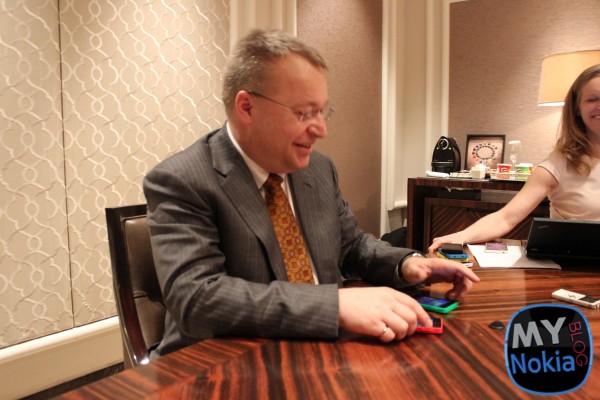
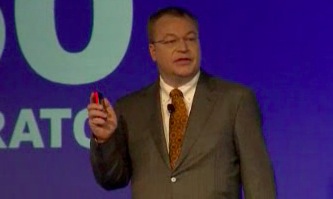
Myself and a select few bloggers were invited to an intimate Q&A session with Stephen Elop, thanks to Nokia Conversations. We weren’t allowed to record the session, however I took a few notes (but missed a few key points too sadly).
Note: Nothing is verbatim.
Q: Why did Nokia go with a capacitive screen on such a “cheap” phone?
A: It is about bringing high-end experiences to more people. On the Asha 501, capacitive screen is used to give a better experience. Several elements were considered and tweaked on a hardware and software level to ensure that there was no performance loss.
Q: What differentiates the Asha 501 from cheap Androids? Does it have multitasking?
A: The OS that the Asha 501 runs on is not a high-end OS. It was not designed to run on high-end devices, then the OS was reduced to a stage where it could “run” on the hardware. The key is the experience, and the Asha 501 delivers a experience tailored to it’s target market, its hardware and price point.
Multitasking is supported on the Asha 501, in the sense that several tasks, such as Twitter notifications, updating Fastlane etc., can occur in the background. The main focus of the Asha 501 is visual multitasking. This is shown in Fastlane where you have access to your most recent apps, as well as control some of your favourites. Just swipe away and it is now in the Fastlane.
Q (Mine): If the Nokia Asha 501 is said to ease the transition, or blur the line, from feature phones, to smart phones, won’t the users who have an Asha 501 who then upgrade to a Nokia Lumia find the experience entirely different? For this sort of an approach, wouldn’t it have made sense to keep the N9, to allow that transition to be more effective.
A: Nokia’s aim in bringing the Asha 501 to market was a consistent services experience across all the devices, as well as bring some of the “Nokia” qualities to the lower price point. For example, the design language, in terms of software coming from the N9, and the physical design inspired by the evolution later seen in the Lumia range.
The Asha 501 is clearly designed for a different market to the Lumia devices, and as such, the elements that are included in the device reflect the needs of the target audience. Durability, something that pretty much every Nokia device is known for, is also a major factor. Finally, imaging. Nokia has been working hard on imaging, and they believe at it’s price point, the Asha 501 has a 3.2mp great camera.
We also get the question, “why not just make Lumia devices cheaper?”, the answer is simple. We designed the Nokia Asha 501 to provide a great experience on low hardware at an incredibly low price. Lumia is Nokia’s future. If it were to bring that experience to low-end devices, like you see on low-end Android, the experience is terrible, and it ruins the integrity of a brand – which is the last thing Nokia want.
Elop did not mention this comment, but I liked it a lot, that I feel it best to be included here.
The Asha 501 provides the same basic experience as the Lumia range in essence. You have a homescreen, that gives you a list of all the apps you have installed. With a simple swipe, you now have a list of updates, varying from app information to notifications and calendar entries. On the Asha, this is achieved by fast lane, on the Lumia, this is Live Tiles. Same basic concept, just presented in a different way.
Q: How big of a role did the Smarterphone acquisition play in terms of the refresh of Asha?
A: Smarterphone was essential! The whole platform was designed with the goal to bring high-end experiences to lower price points and hardware. The acquisition of Smarterphone provided a framework for that. It allowed Nokia to “recycle” the concepts and elements first seen in the N9, and bring them back to market in a way that would run and run efficiently. The Asha 501 is so efficient, it can run for 48days on standby!
Q: Why did you choose a fixed focus camera?
A: Many people who purchase devices at that price point aren’t too fussy about the camera on their phone. As such, the choice was made to include a fixed-focus camera as apposed to auto-focus in an attempt to balance the quality of the experience, and the price point.
Stephen concluded the Q&A stating that the Asha 501 is just the beginning of a new range of next generation Asha devices.
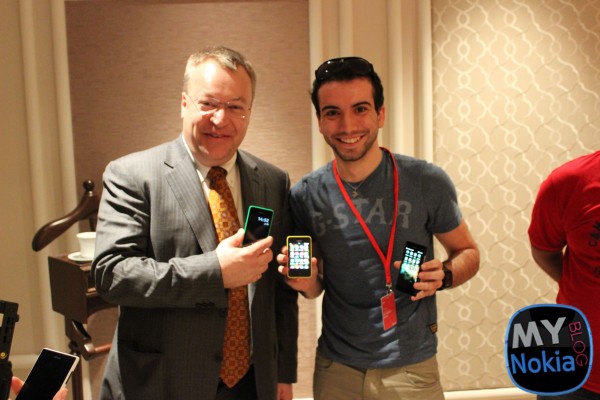
By being seated next to Stephen, I managed to score myself a picture with him
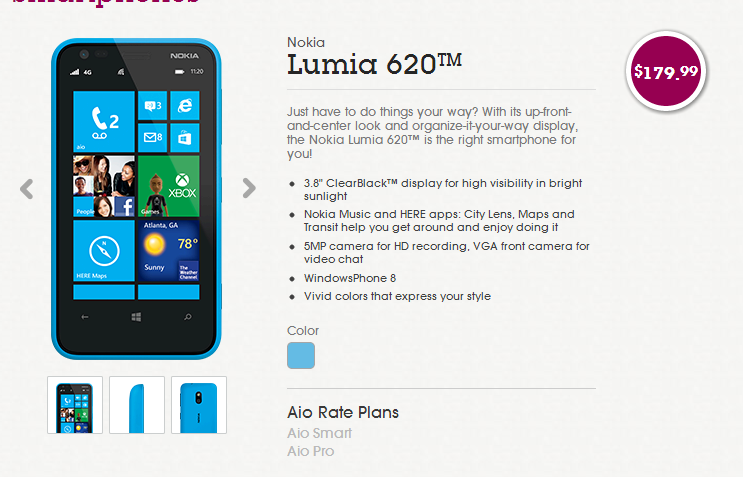
The Lumia 620; which was only recently out-priced as the cheapest Windows Phone 8 device available (by the 520 and the 521) will now officially be available for Purchase in the US on “aio wireless”. The phone is priced at $179 on contract/plan and comes in Cyan, with the option to switch out to anther color free of charge.
When you first buy your Nokia Lumia 620 it comes in cyan, but Aio customers can exchange their shell for violet, yellow or green for no extra charge at Aio retail stores.
Honestly I’ve never heard of Aio wireless before (I assume they buy their data and bandwidth from one of the major providers?); and they don’t seem to have the widest reach in the world seeing how you’re asked to enter your Zip code to see if your area is covered or not. Nonetheless it’s great to see one more carrier (however small) picking up a Lumia.
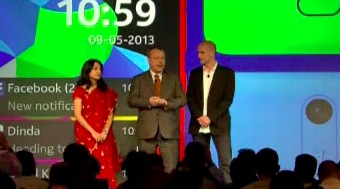
In the event in Delhi, Nokia unveiled its newest Asha device, the Asha 501. The Asha 501 not only continues the N9′s legacy of bright coloured polycarbonate bodies, but also it’s Swipe UI. Yes, the Nokia Asha 501 runs on a refreshed version of Asha Touch that highly resembles MeeGo-Harmattan.
The Nokia Asha 501 is a 2G with WiFi device, priced at under USD$100. It will arrive in a range of colours, including Yellow, Cyan, Red, Green, White & Black. The Asha 501 uses a new Nokia Xpress Browser, the Xpress Now. With Slam, a new VKB reminiscent of WP, Fastlane and so much more! The Nokia Asha 501 has impressive battery life with 47 days standby and 17 hours talk time. CRAZY!
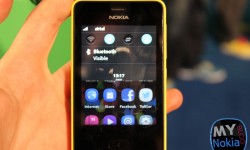
Fastlane shows you the most recent apps you’ve opened and your notifications, showing you past and present. However, it doesn’t stop there! You can swipe down and it will show you the future – upcoming events. Its truly an extension of what we first saw in the N9, done in a way that makes everything you’re doing, you’ve done, or will do, a swipe away!
The Nokia Asha 501 will be the first of the Asha 5xx series, that is the next generation range of Asha devices. A 3G variant will be announced later
There are a single and dual sim variant. The dual sim variant has hot swappable sim capabilities. On top of this, we have a MicroSD slot, with Nokia including a 4GB Micro SD card in the box.
Quick list of specs:
- Dimensions: 99.2 x 58 x 12.1 mm; 98 grams - Screen: 3″ QVGA screen - Camera: 3.2 MP - Single SIM standby time: up to 48 days*** - Dual SIM standby time: up to 26 days*** - Talk time: up to 17 hours - Additional memory of 4GB (card included in box), expandable up to 32GB
Nokia is also providing users with 40 free EA games downloadable from Nokia’s Store. Alongside this, Nokia is partnering with carriers to bring free Facebook usage to its users.
The Asha 501 will be arriving in June, with 60 operators in more than 90 countries. Stephen Elop, Nokia CEO, stated that the “Nokia Asha 501 will reinvent smart devices at that price point”.
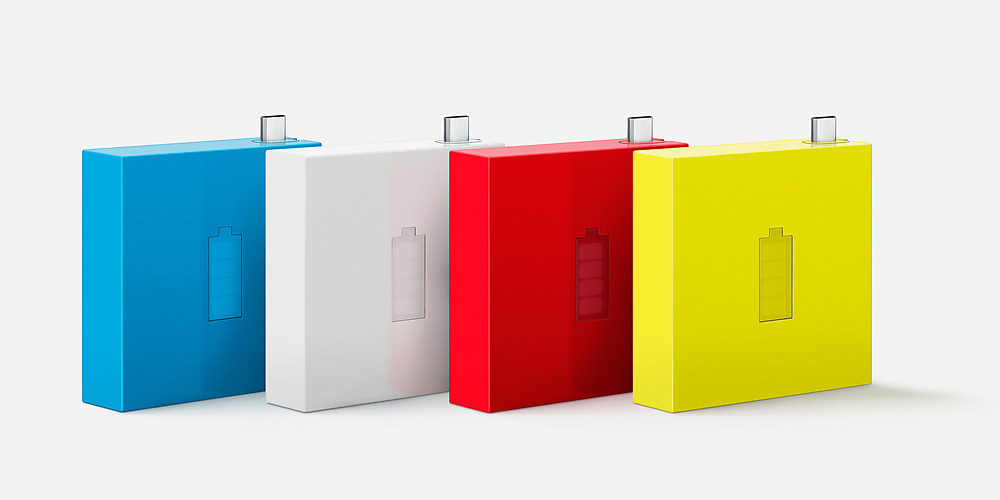
Check out this sexy new portable charger from Nokia; the DC-18 with a pretty sweet capacity of 1720 mAh. The battery icon on the charger changes depending on the charge status.
Stephen Elop said the affordable smartphone area is a 40B industry for 2014. The Nokia Asha 501 is expected to come in at just 99USD, to be delivered to millions of people around the world in June.
Personal information management features: Digital clock, Recorder, Calculator, Clock, Calendar, Phonebook, Fixed dialling number, Notes, Alarm clock, Social networks in Phonebook
Messaging features: Concatenated SMS for long messages, Text messaging, Unified MMS/SMS editor, Automatic resizing of images for MMS, Multimedia messaging, Conversational chat style SMS, Unified inbox for SMS and MMS








No comments:
Post a Comment